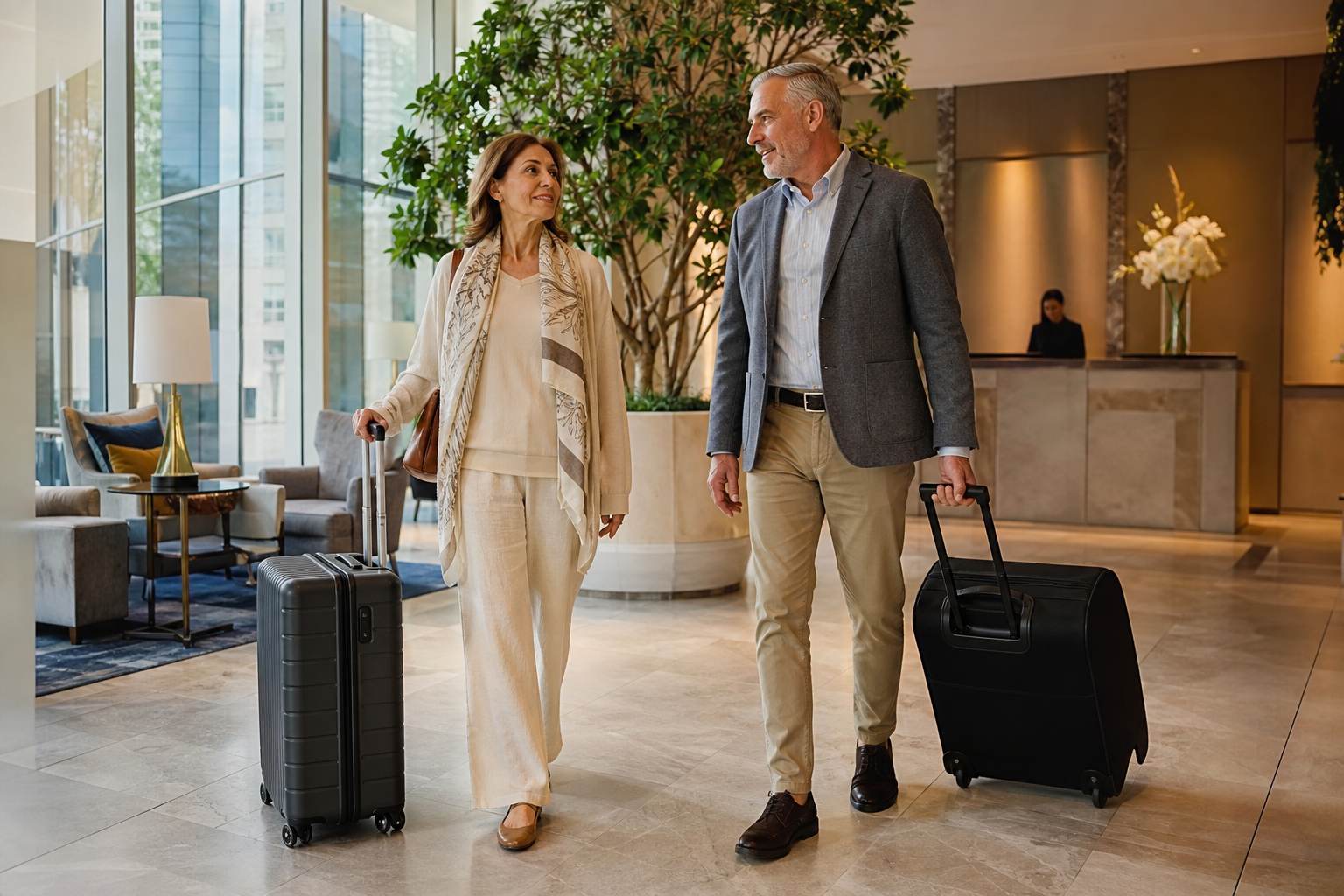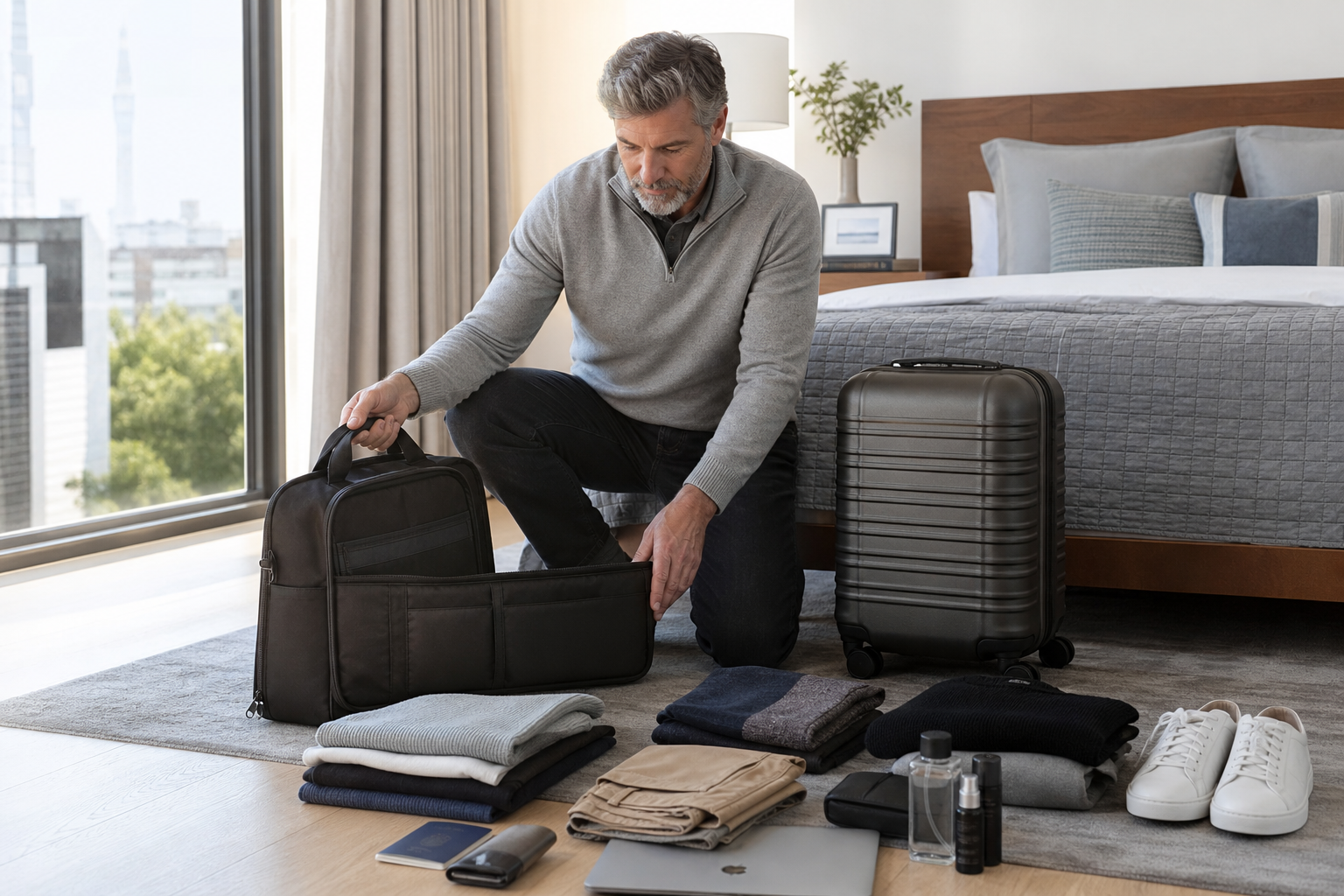
Choose an underseat bag when you can pack compactly, want to avoid overhead-bin competition, or are flying a fare that limits larger cabin bags. Choose a carry-on when your trip lasts several days, you need multiple outfits or shoes, or you want a more structured packing system. Before buying, check the airline operating each flight because personal-item and carry-on limits vary.
What Matters Most
Start with the job: pack light or pack comfortably?
For a one- or two-night trip, the job is usually to carry a change of clothes, basic toiletries, electronics, medication or personal essentials, and perhaps a small pair of shoes. If that list fits in a compact soft-sided bag, an underseat model can keep the trip simple: it stays with you, does not depend on overhead-bin space, and can make a quick exit easier.
A carry-on is better when the real job is flexibility. More volume gives you room for extra layers, a second pair of shoes, a jacket, work materials, or items you may pick up during the trip. That space can also make packing less compressed, which matters if you prefer easy access and organized compartments over tightly rolled clothing.
The number of nights is only a rough guide. A two-night business trip may need a blazer, dress shoes, and technology that favors a carry-on. A four-night warm-weather trip may fit in an underseat bag if you are comfortable repeating pieces and using lightweight clothing.
- Underseat bag: best for compact packing, quick trips, and keeping everything within reach.
- Carry-on: best for more outfit choices, bulkier items, and less restrictive packing.
Underseat bags: the case for traveling smaller
An underseat bag is generally used as a personal item. It is designed to fit beneath the seat in front of you rather than in the overhead compartment. The advantage is predictability: you do not need to look for bin space, and if overhead compartments fill up, your main bag is already at your seat.
Underseat bags also work well when you want to move through the airport with less bulk. A backpack, tote, compact duffel, or small rolling personal-item bag can be easier to carry through public transportation, hotel lobbies, and narrow aisles than a larger roller case. Soft sides may help the bag fit into a tight space, but they can also make it easier to overstuff beyond the airline’s stated dimensions.
The main trade-off is capacity. Underseat space varies by aircraft, seat location, and airline. A bag that looks like a personal item in a store may be too tall, deep, or rigid once its wheels, handles, and exterior pockets are included. American Airlines, for example, lists 18 x 14 x 8 inches as its personal-item maximum, while Delta describes a personal item as a purse, laptop bag, small backpack, or similar item that fits beneath the seat. ([aa.com](https://www.aa.com/i18nForward.do?p=%2Ftravel-info%2Fbaggage%2Fcarry-on-baggage.jsp&utm_source=openai))
- Choose one with a narrow profile and a flexible top panel.
- Look for a separate laptop section only if it does not sacrifice the main packing compartment.
- Avoid relying on expanded dimensions unless your airline specifically permits them.
Carry-ons: the case for capacity and structure
A standard carry-on roller is the more comfortable choice when you want a little margin in your packing. The overhead compartment can hold a small suitcase with a more usable main compartment, compression panel, and organized sections for shoes or toiletries. That can be especially helpful for travelers who dislike forcing every item into a personal-item-sized bag.
The trade-off is that an overhead bag adds another stage to the airport routine. You may need to lift it into the bin, wait for access after landing, and deal with the possibility of a gate check if the flight is full or the aircraft has limited storage. Delta notes that agents may need to restrict carry-ons on especially full flights, and Delta Connection flights with 50 seats or fewer may permit only personal items in the cabin. ([ko.delta.com](https://ko.delta.com/kr/ko/baggage/carry-on-baggage?utm_source=openai))
Carry-on dimensions are not universal. American and Delta both publish a common-looking maximum of 22 x 14 x 9 inches, while Southwest lists a larger maximum of 24 x 16 x 10 inches. Those differences matter if you fly several airlines or use partner carriers. American also says wheels and handles count toward its carry-on dimensions. ([aa.com](https://www.aa.com/i18nForward.do?p=%2Ftravel-info%2Fbaggage%2Fcarry-on-baggage.jsp&utm_source=openai))
- Choose a carry-on when you need more than one pair of shoes or bulky layers.
- Prioritize a manageable empty weight and a comfortable handle height.
- Measure the actual exterior, including wheels, handles, and rounded corners.
Airline rules can change the better choice
The most important question is not simply whether a bag is marketed as an underseat bag or carry-on. It is whether your fare and aircraft allow that category. Many airlines allow one personal item and one carry-on, but a personal item must fit under the seat and a carry-on must fit the overhead bin or the airline’s sizer. Southwest, for example, states that passengers may bring one carry-on and one personal item, with a 24 x 16 x 10-inch carry-on limit. ([support.southwest.com](https://support.southwest.com/helpcenter/article/carryon-baggage-policy?utm_source=openai))
Check the policy for the airline operating each flight, especially when your itinerary includes a partner airline. Southwest specifically says partner-airline guidelines may differ. Also check the fare conditions: a larger carry-on may not be included in every fare or on every route, and regional aircraft may have less overhead capacity than the aircraft used for the main part of your journey. ([support.southwest.com](https://support.southwest.com/helpcenter/article/carryon-baggage-policy?utm_source=openai))
For a simple buying rule, choose a personal-item-sized bag if you want the safest bet across flights and can pack lightly. Choose a carry-on only after confirming the permitted dimensions and deciding that the extra capacity is worth the lifting, storage, and gate-check risk.
- Measure in inches and centimeters if you fly internationally.
- Check the operating carrier, not just the airline where you purchased the ticket.
- Treat advertised capacity as secondary to the bag’s external measurements.
Packing, access, and security details
Underseat bags are convenient for items you may want during the flight, such as headphones, a book, glasses, chargers, or a water bottle after security. The downside is that underseat space leaves less room for your feet, particularly with a rigid case or a fully packed bag. A slimmer soft-sided design may be more comfortable than a boxy rolling model.
Carry-ons are easier to organize when they have a clamshell opening, compression straps, and a compartment that keeps shoes or toiletries separate from clothing. But do not bury items that may need to come out during security screening. TSA’s 3-1-1 guidance limits liquids, gels, aerosols, creams, and pastes in carry-on baggage to containers of 3.4 ounces or less, fitting in one quart-size clear bag per passenger. ([tsa.gov](https://www.tsa.gov/news/press/factsheets/tsa-travel-tips?utm_source=openai))
Battery-powered essentials deserve special attention whichever bag you choose. Spare lithium batteries and power banks must remain in the cabin rather than checked baggage. If a carry-on is gate-checked, the FAA advises removing spare batteries, portable chargers, and similar devices and keeping them with you. ([faa.gov](https://www.faa.gov/hazmat/packsafe/baggage-with-lithium-batteries?utm_source=openai))
- Keep liquids accessible for screening.
- Pack chargers and power banks where you can reach them.
- If a bag may be gate-checked, remove spare batteries and other cabin-only items first.
Which one should you buy for your next short trip?
Buy an underseat bag if your usual trip is one to two nights, you prefer a small footprint, and your packing list is mostly clothing, toiletries, and personal electronics. It is also a strong fit when you value keeping your bag under the seat and want to avoid depending on overhead-bin availability. A backpack or flexible duffel usually offers the best chance of accommodating irregular items without wasting space on a rigid frame.
Buy a carry-on if your short trips involve business clothing, colder-weather layers, multiple shoes, camera equipment, or a preference for not compressing your belongings. A small roller can reduce the amount you carry on your shoulder, but make sure you are comfortable lifting it into an overhead bin and that its actual dimensions comply with the airlines you use most.
If you are undecided, consider owning one of each rather than forcing one bag to do every job. An underseat bag handles minimalist overnight travel and serves as a personal item alongside a carry-on. The carry-on handles longer weekends and trips where comfort, organization, and outfit flexibility matter more than moving with the smallest possible load.
- Best overall for a minimalist one- or two-night trip: underseat bag.
- Best overall for a flexible weekend or work trip: carry-on.
- Best two-bag setup: use the underseat bag as your personal item and the carry-on for clothing.
Sources & editorial note
This guide is research-based and does not claim hands-on testing unless explicitly stated.
- American Airlines — Carry-on bags and size limits — Supports American Airlines personal-item and carry-on dimensions, allowance, and measurement guidance.
- Delta Air Lines — Carry-On Baggage — Supports Delta personal-item examples, carry-on dimensions, limited overhead space, and regional-aircraft restrictions.
- Southwest Airlines — Carryon and Personal Item Policy — Supports Southwest carry-on dimensions, personal-item guidance, and partner-airline caveat.
- Transportation Security Administration — Travel Tips — Supports the 3-1-1 liquids rule and general carry-on screening guidance.
- Federal Aviation Administration — PackSafe — Supports cabin-carry requirements for spare lithium batteries, power banks, and battery-equipped baggage.
- Federal Aviation Administration — Carry-On Baggage Tips — Supports general guidance about overhead capacity, airline-specific rules, and removing batteries if a bag is gate-checked.