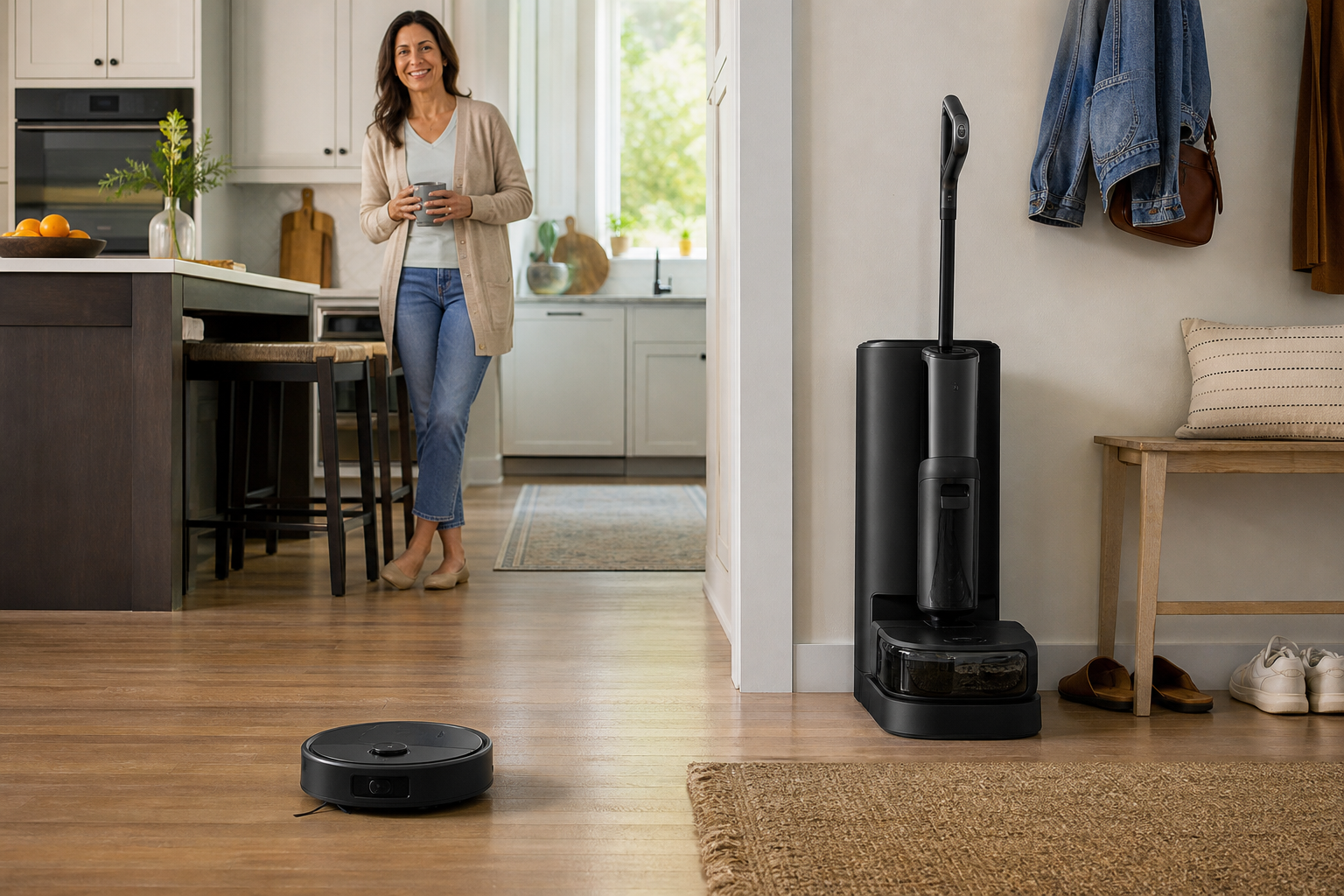
Choose a robot vacuum if your main problem is dust, crumbs, pet hair, and tracked-in grit across carpet and hard floors. Choose a robot vacuum-mop combo if hard floors dominate and you want one machine to handle frequent dry debris and light wet-floor cleaning, especially when the dock can empty dust, wash and dry mop pads, and refill water automatically.
What Matters Most
Start with the job to be done
If the job is keeping floors presentable between deeper cleanings, both machines can help. A robot vacuum focuses on dry debris: dust, crumbs, hair, and grit. A vacuum-mop combo adds a wet-cleaning step, usually by dispensing water onto a pad or roller while collecting debris.
The important distinction is not simply vacuum versus mop. It is whether adding wet cleaning saves you a separate chore or creates new upkeep. A combo can reduce the number of times you reach for a mop, but it also introduces water tanks, damp pads, wastewater, and a dock or roller that needs attention.
For many homes, the best answer is floor-specific. Carpet-heavy spaces generally gain more from a dependable vacuum-only robot. Mostly hard-floor homes with kitchen traffic, footprints, and everyday residue may gain more from a combo.
When a robot vacuum reduces more work
A robot vacuum is usually the lower-effort choice when dry debris is the recurring problem. You can schedule regular runs, send the machine to selected rooms, and let it work underneath furniture or along floor edges without setting up a vacuum each time. Mapping and room controls are now common features across robot categories, although navigation and obstacle avoidance vary by model.
Vacuum-only models also simplify floor care because there is no clean-water tank, dirty-water tank, mop pad, or wet-cleaning cycle to manage. Models with a self-emptying base can reduce how often you empty the robot’s dustbin; manufacturers still note that actual intervals depend on use and household conditions. ([irobot.com](https://www.irobot.com/en_US/roomba-combo-j7plus-robot-vacuum-and-mop/C755020.html?utm_source=openai))
This option fits homes with a lot of carpet, multiple rugs, long cleaning schedules, or residents who already prefer to mop manually when needed. It also makes sense if your wet-cleaning needs are occasional rather than daily. You get automated floor pickup without paying for or maintaining a feature you may rarely use.
- Best fit: carpet, rugs, pet hair, dust, crumbs, and routine maintenance.
- Main advantage: fewer wet parts and a simpler care routine.
- Main limitation: you still need a separate mop or manual floor cleaner for sticky and wet messes.
When a vacuum-mop combo reduces more work
A robot vacuum-mop combo can reduce more total floor work when hard surfaces make up most of the home and wet cleaning is a regular task. Depending on the model, it may vacuum and mop in one pass, use separate vacuum-only or mop-only modes, and adjust room-specific cleaning settings through an app. Some models are designed to lift the mop away from rugs, while others require you to define no-mop areas or remove the mop attachment. ([irobot.com](https://www.irobot.com/en_US/roomba-combo-j7plus-robot-vacuum-and-mop/C755020.html?utm_source=openai))
The biggest labor difference comes from the dock, not the word combo on the box. Higher-automation docks may empty dust, refill clean water, wash mop pads, and dry them with warm air. Those features can make frequent mopping more practical because you are not rinsing a pad after every run. Even so, the dock itself still needs periodic cleaning, and the robot’s water system must be handled according to the manufacturer’s instructions. ([us.roborock.com](https://us.roborock.com/products/roborock-qrevo?bvstate=pg%3A2%2Fct%3Ar&tw_adid=&tw_source=google&variant=40065261011062&utm_source=openai))
A combo is especially useful for kitchens, entryways, dining areas, and other hard-floor zones where dust pickup alone leaves the surface looking unfinished. It is less compelling if your home is mostly carpet or if you only mop a few times a month.
- Best fit: mostly hard floors, frequent footprints, kitchen residue, and daily dry debris.
- Main advantage: one scheduled system can handle routine vacuuming and light wet cleaning.
- Main limitation: more parts to fill, empty, wash, dry, and occasionally unclog.
The trade-off: fewer chores versus different chores
Neither option is completely hands-off. Both work best when floors are prepared: cords, socks, toys, clothing, and small objects can interrupt a run or become tangled in a brush. Robot vacuums also need their main brush, side brush, sensors, wheels, and filter checked periodically. Obstacle avoidance can reduce interruptions, but it does not eliminate the need for basic floor pickup.
Combos add wet-care decisions. You may need to fill a clean-water tank, empty wastewater, wash or replace pads, clean the dock’s wash area, and make sure damp components dry properly. Roborock’s support material, for example, instructs owners to manage water tanks, auto-emptying, mop washing, and drying as separate maintenance tasks. ([support.roborock.com](https://support.roborock.com/hc/en-us/article_attachments/7069956958361?utm_source=openai))
There is also a difference between maintenance cleaning and rescue cleaning. A combo may keep up with light marks and fresh residue, but a dried spill, heavy grease, concentrated mud, or a large wet mess can still require immediate manual attention. For those situations, direct control is often faster than waiting for a scheduled robot cycle.
What to look for if you choose a robot vacuum
Prioritize the features that reduce interruptions rather than the most dramatic suction number. Useful specifications include reliable room mapping, effective edge cleaning, a brush design that suits your hair or pet situation, a washable or replaceable filter, and a base that is easy to access. If you have rugs, check how the robot handles transitions and whether the model offers carpet detection or a vacuum-only routine.
A self-emptying base can reduce bin handling, but confirm the practical details: bagged or bagless disposal, replacement-bag availability, base dimensions, and whether the base can fit where you plan to place it. Also check whether the app supports room scheduling, no-go zones, multiple floors, and cleaning preferences that match your routine.
For a home with mostly carpet and occasional hard-floor mopping, a vacuum-only robot paired with a simple manual mop may be the more efficient system. It avoids paying for wet-cleaning hardware while keeping the automated dry-cleaning job focused.
- Check carpet and rug behavior before buying.
- Compare brush access, filter replacement, and dustbin or bag handling.
- Measure the dock location, including clearance for opening tanks or removing bags.
What to look for if you choose a vacuum-mop combo
Start with mop behavior on your actual floor mix. A model that lifts its mop or retracts it away from carpet is easier to live with in mixed-floor homes than one that depends on manually selected no-mop zones. iRobot describes both retracting and lift-based approaches in its current combo lineup, while other manufacturers use automatic mop lifting and carpet detection. ([irobot.com](https://www.irobot.com/en_US/roomba-combo-j7plus-robot-vacuum-and-mop/C755020.html?utm_source=openai))
Then examine the full maintenance loop: clean-water capacity, dirty-water handling, mop washing, mop drying, dust disposal, detergent restrictions, and access to the dock’s wash basin. A combo that washes pads but does not dry them may still leave you with damp components to manage. Manufacturer instructions should take priority over generic cleaning advice, especially for approved solutions and water handling. ([us.roborock.com](https://us.roborock.com/products/roborock-qrevo?bvstate=pg%3A2%2Fct%3Ar&tw_adid=&tw_source=google&variant=40065261011062&utm_source=openai))
Finally, be realistic about what the mop is for. These machines are most useful for ongoing surface maintenance, not for replacing every deep-cleaning tool. If your priority is removing fresh paw prints and everyday kitchen film with minimal intervention, the combo may reduce more work. If your priority is strong dry pickup across carpet, keep the vacuuming side first.
The direct answer for common homes
For a carpet-heavy home, choose the robot vacuum unless you already know you will use the mop feature frequently. The vacuum-only model usually creates the cleaner workflow: schedule dry pickup, empty or replace the dust container when needed, and mop separately on your own timetable.
For a mostly hard-floor home, choose the vacuum-mop combo when wet cleaning is part of your normal week. The strongest labor-saving setup is a model with automatic dust disposal, mop washing, mop drying, water management, and reliable rug protection. Without those features, a combo may still clean well but can shift work from the floor to the machine.
For a mixed home, let the highest-frequency annoyance decide. If hair, grit, and carpet debris are constant, favor the robot vacuum. If hard-floor footprints and kitchen residue are what you notice most, favor the combo. In either case, the product that fits your real cleaning schedule—not the one with the longest feature list—will reduce more floor work.
- Mostly carpet: robot vacuum.
- Mostly hard floor with frequent mopping: vacuum-mop combo.
- Mixed floors: choose based on whether dry debris or wet-floor upkeep is the bigger recurring task.
Sources & editorial note
This guide is research-based and does not claim hands-on testing unless explicitly stated.
- iRobot Roomba Combo j7+ product documentation — Supports room controls, simultaneous vacuuming and mopping, mop retraction for carpets, obstacle avoidance, and automatic dirt disposal.
- iRobot Roomba Combo i5 product documentation — Supports the distinction between vacuum-only and vacuum-mop operation, room mapping, carpet handling, and separate mop-bin use.
- Roborock Qrevo product documentation — Supports examples of multifunction docks with self-washing, self-drying, self-emptying, self-refilling, mop lifting, and navigation features.
- Roborock support instructions for empty-wash-fill docks — Supports ongoing water-tank, auto-emptying, mop-washing, drying, and dock-care requirements.
- iRobot Roomba 105 Combo product documentation — Supports current examples of selectable vacuum, mop, and combined modes plus carpet detection.