Choose a backpack if you will walk through large airports, carry electronics, or want to keep both hands free. Choose a tote if you pack light, prefer a wide opening, need frequent access to snacks or documents, or want a bag that can double as a day bag at your destination. Whichever style you choose, confirm the airline and aircraft rules before departure because personal-item dimensions are not universal.
What Matters Most
Start with the job: what needs to happen under the seat?
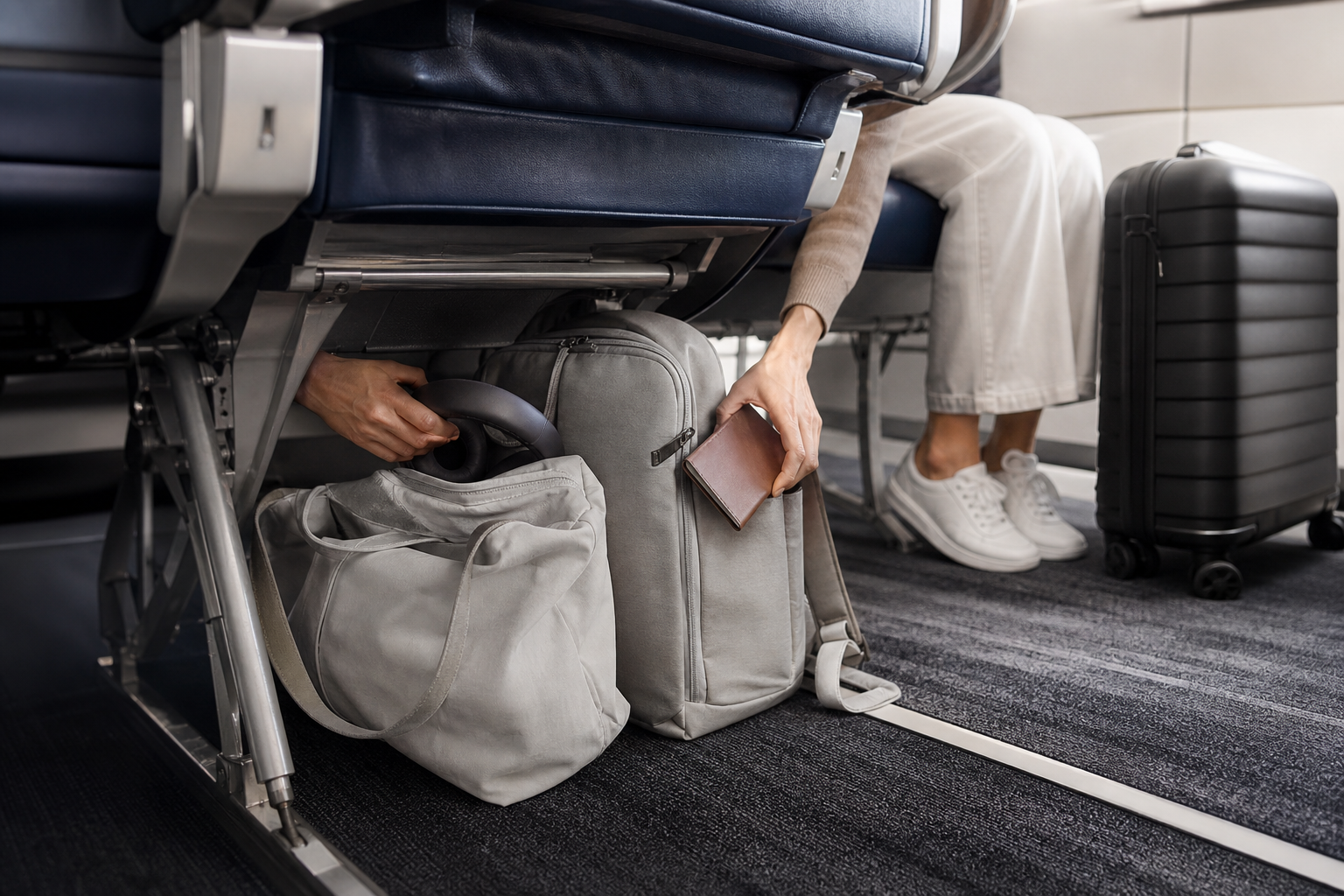
A personal item has a different job from an overhead carry-on. It should hold the things you may need before landing—passport, wallet, phone, headphones, glasses, medication, a water bottle, a book, snacks, and perhaps a laptop—while remaining compact enough to slide under the seat in front of you. The goal is not simply to maximize capacity. It is to make those essentials available without repeatedly opening the overhead bin or placing loose items on the floor.
That makes the tote-versus-backpack decision less about fashion and more about movement and access. A tote prioritizes a wide opening and quick visibility. A backpack prioritizes weight distribution, hands-free mobility, and a narrower profile. Either can work well, but the better choice depends on how you travel between the curb, security line, gate, seat, and destination.
- Best overall for most travelers: a soft-sided backpack with a structured base.
- Best for quick access and a lighter load: a compact tote.
- Best for strict airline rules: a flexible bag with no rigid frame or bulky wheels.
The first hurdle is airline fit—not the label on the product page
Airlines generally describe a personal item by where it must go: under the seat in front of you. The exact allowance can differ. American Airlines lists a maximum personal-item size of 18 x 14 x 8 inches, while Delta describes a personal item as a purse, laptop bag, small backpack, or similar item that fits securely under the seat. Southwest gives examples such as a backpack, laptop case, or purse and also emphasizes that the item must fit under the seat. ([aa.com](https://www.aa.com/i18n/travel-info/baggage/carry-on-baggage.jsp%3FreportedLocation%3DhomePage.do%26reportedPosition%3D1%26reportedTitle%3DProhibido%2Bviajar%2Bcon%2Bel%2BSamsung%2BGalaxy%2BNote%2B7%26repositoryName%3DPromotionContentRepository%26repositoryId%3D16787342%26locale%3Des_US?utm_source=openai))
The practical takeaway is to check the rules for the operating airline, not only the airline that sold the ticket. Aircraft layouts can also affect the usable space, especially in smaller regional cabins. A bag that fits comfortably beneath one seat may be harder to place under another because of seat supports, an entertainment box, an emergency-equipment enclosure, or a narrower footwell. Measure the packed bag, including exterior pockets, handles, compression panels, and anything that protrudes.
Avoid choosing a bag solely because its stated dimensions are close to the maximum. A rigid, fully packed bag may be difficult to push under the seat even when the numbers appear acceptable. A soft-sided bag with a firm base and flexible upper section gives you more room to adapt without allowing the contents to collapse into your feet.
- Look for the airline’s current personal-item policy before each trip.
- Measure the bag when packed, not just when empty.
- Treat wheels, rigid frames, thick laptop panels, and long handles as lost interior space.
Why a personal-item tote can work better
A tote is often the easier choice when access matters more than hands-free carrying. Its wide, open top lets you see a book, charger, snack, or document quickly. That is useful during boarding, at the gate, and once you are seated. A tote can also be easier to pack with irregularly shaped items because you are not working around a narrow zipper opening or a tall, vertical compartment layout.
Totes are especially appealing for short flights, business trips, and travel days when you want a bag that looks at home in an airport lounge, office, or café. A zippered top is preferable for air travel because it keeps contents contained when the bag is turned sideways. A sleeve that slides over a suitcase handle can also make a tote more convenient when you already have rolling luggage.
The trade-off is carrying comfort when the tote becomes heavy. Even wide straps can concentrate the load on one shoulder, and an open, flexible shape may swing into seats or doorways. A tote can also be deceptively spacious: because it is easy to keep adding items, it may become too full to slide under the seat. For that reason, the best personal-item tote has a defined base, a secure closure, and some structure without becoming a rigid box.
- Choose a tote for fast access, a wide opening, and a streamlined day-to-evening look.
- Prioritize a zipper, a stable base, and straps long enough to carry over a coat.
- Skip oversized shopper-style totes that have no way to close or compress.
Why a backpack can work better
A backpack is usually the more versatile option when you will walk, transfer between transportation modes, or carry a laptop and other dense items. Two shoulder straps keep your hands free for a boarding pass, coffee, suitcase handle, or handrail. The load also stays closer to your body than it does with a shoulder tote, which can make a packed bag feel more controlled while moving through a busy terminal.
Backpacks tend to use vertical space efficiently. A dedicated laptop sleeve, front organizer, water-bottle pocket, and main compartment can separate flight essentials without requiring a large footprint. A clamshell or wide-opening design makes packing easier, while a more traditional top-loading design may compress better beneath a seat. For a personal item, the right backpack is not necessarily the largest one; it is the one that remains compact when full.
The drawbacks are access and bulk. Some travel backpacks have thick padding, pronounced frames, sternum straps, or exterior pockets that make them larger than they appear. A heavily structured backpack may fit in an airport sizer but resist sliding under the seat. Straps can also catch on armrests or nearby bags. Look for removable or low-profile straps, a smooth underside, and compression features that let you reduce the bag’s depth.
- Choose a backpack for hands-free movement, electronics, and longer airport walks.
- Look for a compact rectangular profile rather than a hiking-style shape.
- Check that the laptop compartment does not create a rigid, bulky back panel.
How the two styles compare in real travel situations
For a short domestic flight with a small roller bag overhead, a tote may be the most convenient companion. You can keep identification, reading material, headphones, and snacks visible and reachable. If you are traveling for work, a slim tote may also transition more naturally from the airport to a meeting. Choose a backpack instead if the terminal is large, you have a long connection, or you do not want one shoulder carrying the entire load.
For a no-overhead-bin itinerary, a backpack usually has the advantage because it can hold more while remaining manageable. That does not mean choosing a maximum-size bag and stuffing it until the zipper strains. A compact personal-item backpack with flexible sides is easier to position under the seat than a boxy tote filled to the top. If you need to bring a change of clothes, consider whether the bag has enough depth without sacrificing legroom.
For international connections or mixed-airline itineraries, lean toward the more conservative option. A smaller backpack or tote is less likely to create problems when one carrier has tighter rules than another. If the trip includes a smaller regional aircraft, a soft, compressible bag is particularly useful. Delta notes that flights operated by smaller Delta Connection aircraft may have limited storage and may require personal items to fit securely in the available space. ([delta.com](https://www.delta.com/us/en/baggage/carry-on-baggage?pubDate=20250318&utm_source=openai))
- Short flight plus overhead roller: tote often wins for access.
- Long airport walk or no overhead bag: backpack usually wins.
- Multiple airlines or smaller aircraft: choose the smaller, softer, more compressible option.
What to look for before you buy
Start with exterior dimensions, then inspect the shape. A bag that is one inch too deep can be more troublesome than one that is slightly taller because under-seat space is often constrained by the seat structure and the passenger’s feet. A flat or lightly padded bottom helps the bag slide into place. Avoid wheels for a true personal item unless you have verified that they do not consume too much of the available height and depth.
Organization should support the flight rather than add bulk. One easily reached exterior pocket is useful for a passport or phone, but a bag covered in thick pockets may waste space. Inside, prioritize a secure laptop sleeve if you carry a computer, a key clip or small zip pocket, and enough open space for soft items. Compression straps can help, but they should not make the bag awkward to open while seated.
Finally, consider what happens after the flight. A tote may become a useful day bag, work bag, or shopping bag. A backpack may be better for sightseeing, commuting, or carrying a jacket and water bottle. The most useful personal item is often the one that earns its place beyond the aircraft, provided it still meets the under-seat requirements for your route.
- Prefer a soft-sided build with a structured base.
- Choose a secure zipper and low-profile exterior pockets.
- Check strap comfort, suitcase compatibility, and how the bag works at your destination.
Bottom line: choose access or mobility
Choose a personal-item tote when your priority is quick access, a wide opening, and a bag that can move easily from plane to office or café. Keep it compact, zippered, and lightly packed so it remains easy to place under the seat. A tote makes the most sense when you already have your main luggage handled and only need a well-organized stash of in-flight essentials.
Choose a backpack when you want the safest all-around format for airport movement, electronics, and a fuller personal item. A small, flexible backpack is generally easier to carry through long terminals and less likely to feel unbalanced when loaded. Just avoid oversized travel packs with rigid frames or excessive padding.
If you are undecided, select a soft-sided backpack that opens widely, has a stable base, compresses when under-filled, and stays within the strictest personal-item dimensions on your itinerary. That gives you most of the tote’s usable organization while preserving the backpack’s hands-free advantage.
- Tote: best for access, light packing, and a polished multipurpose bag.
- Backpack: best for mobility, electronics, and carrying more comfortably.
- When in doubt: buy for the smallest under-seat allowance on your itinerary.
Sources & editorial note
This guide is research-based and does not claim hands-on testing unless explicitly stated.
- American Airlines Carry-on Bags and Size Limits — Supports American Airlines personal-item placement and 18 x 14 x 8 inch dimensions.
- Delta Air Lines Carry-on Baggage — Supports Delta’s personal-item examples, under-seat requirement, and smaller-aircraft storage caveat.
- Southwest Airlines Carryon and Personal Item Policy — Supports Southwest’s examples of personal items and requirement that the item fit under the seat.