For most travelers, a digital luggage scale is easier to trust because its numeric display, weight-hold function, and unit conversion reduce guesswork. Choose a mechanical scale if you want a no-battery backup, travel infrequently, or prefer a simple dial and are comfortable leaving a wider margin below your airline’s limit.
What Matters Most
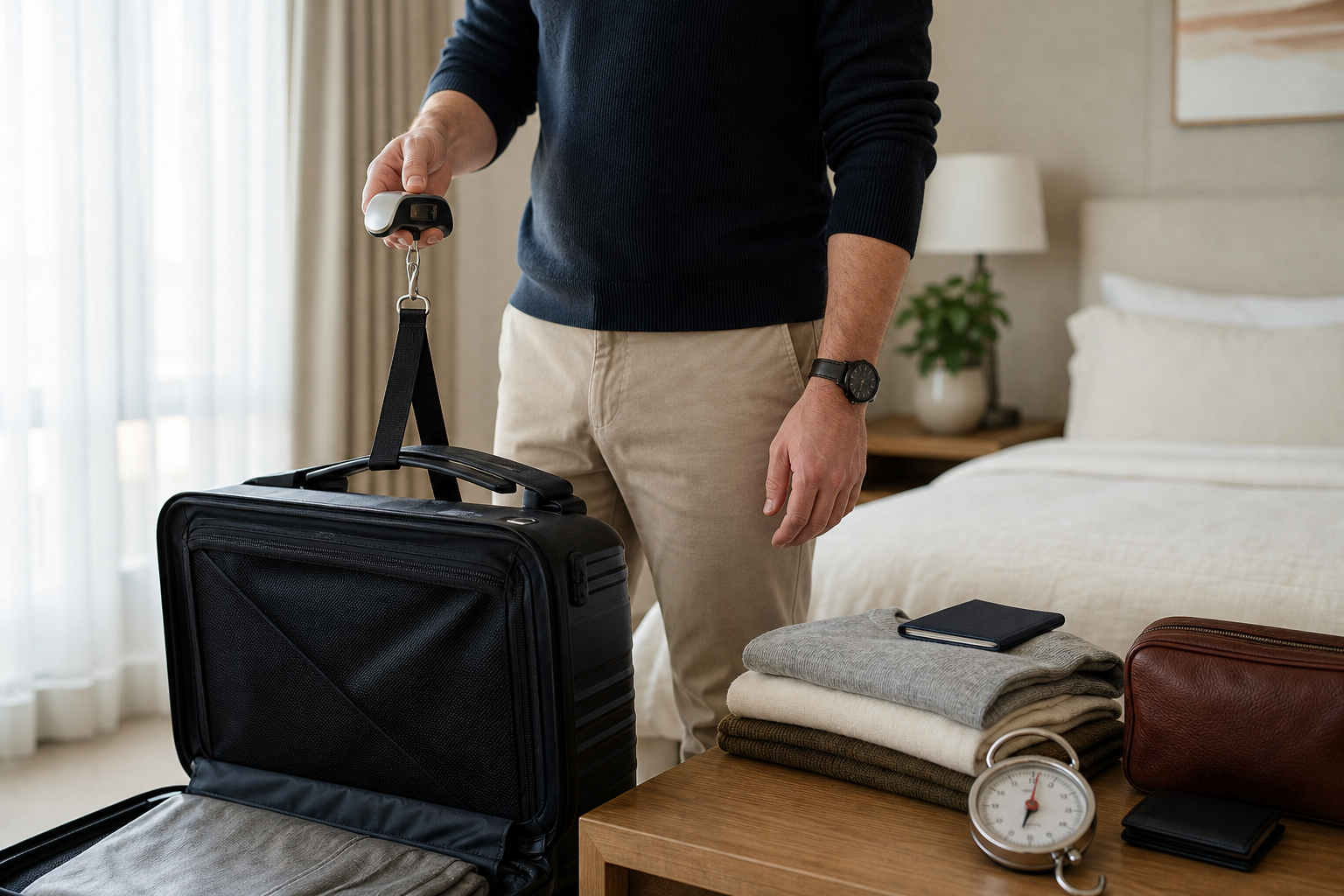
Explore Options That Fit Your Everyday Routine
Explore products that fit your priorities, compare current options and discover what works best for you.
Check prices, seller details and specifications on Amazon. Featured image is illustrative.
As an Amazon Associate I earn from qualifying purchases.
Start with the real decision: precision or independence?
A luggage scale is not meant to replace the airline’s certified weighing equipment. It is a planning tool that tells you whether your bag is comfortably under the limit or close enough to require repacking. Airline baggage allowances vary by carrier, route, fare, and loyalty status, so check the rules for your specific trip before deciding how close to the limit you want to pack.
The most useful distinction between the two types is not that one is automatically accurate and the other is automatically unreliable. Both can give useful results when used correctly. The practical difference is how easy it is to read the result, how much information the scale gives you, and whether the mechanism depends on a battery.
If your suitcase must come in just under a stated limit, digital usually has the advantage. If you routinely leave several pounds of breathing room and want something that can sit in a drawer for years, mechanical may be the more dependable-feeling choice.
- Digital: clearer numbers and more features, but battery-dependent.
- Mechanical: simpler and battery-free, but usually harder to read precisely.
- Either type is best used with a safety margin rather than packing to the exact limit.
Why digital luggage scales are easier to read
Digital luggage scales use an electronic sensor and show the result on a screen. Common features include pound/kilogram conversion, tare, automatic shutoff, overload indication, low-battery alerts, and a data-lock or hold function that keeps the reading visible after you stop lifting.
That last feature matters more than it sounds. A packed suitcase can be awkward to hold at eye level, particularly when the display faces away from you or the bag blocks your view. A hold function lets you lower the bag and confirm the number without trying to maintain the lift while squinting at a small screen.
Digital models are also more convenient when you are comparing several packing arrangements. You can weigh the case, remove a pair of shoes, add a toiletry bag, and check the difference without estimating where a needle has settled. For travelers who use both pounds and kilograms, one-button conversion removes another source of mental arithmetic.
- Look for a readable screen, data hold, automatic shutoff, and a low-battery warning.
- A tare function is useful when you are weighing an item attached to or hanging from another object.
- A higher displayed resolution does not automatically mean higher real-world accuracy.
Where mechanical scales still make sense
A mechanical luggage scale uses a spring and an analog indicator rather than an electronic display. It needs no battery, charging cable, or power button. That makes it appealing as a long-term backup in a travel drawer, an emergency item in a suitcase, or a choice for travelers who do not want another small electronic device to maintain.
The trade-off is readability. Small dials can be difficult to interpret while you are holding a heavy bag, and the needle may move as the load settles. Depending on the design, a locking pointer can make the final reading easier to check, but you still need to read the scale from the correct angle and distinguish small increments on the dial.
Mechanical is therefore a good fit when the scale’s job is to prevent a major overage rather than optimize every ounce. If your target is comfortably below the airline’s limit, a clear approximate reading may be all you need. If you are trying to use nearly every permitted pound, the dial can leave too much room for uncertainty.
- Best suited to travelers who value battery-free operation.
- Useful when the bag will be stored for long periods between trips.
- Choose a large, high-contrast dial with a stable pointer and a comfortable handle.
Which one is more trustworthy in practice?
Trust comes from repeatable use, not from the word digital or mechanical on the packaging. A scale can give inconsistent results if the strap is not fully secured, the bag is touching the floor, the scale is tilted, or the user lifts and lowers the luggage before the reading settles. The manufacturer’s instructions matter, especially for how the bag should be suspended and when to read the result.
Digital models can be easier to trust because the number is unambiguous and features such as hold, overload, and low-battery alerts help reveal problems. They can also become less useful if the battery is weak, the screen is difficult to see, or the scale turns off before you finish handling the bag. Keeping a spare compatible battery at home is sensible, but do not assume a battery warning will appear on every model.
Mechanical models avoid electronic failure, but their spring mechanism and dial are not immune to wear or damage. A scale that has been overloaded, dropped, or stored under pressure may no longer deserve your confidence. Whichever type you choose, test it occasionally with the same known item or compare it with another reliable scale. If the result is close to the airline’s limit, remove more weight rather than arguing over a small difference.
- Use the scale on a hard, stable surface while the luggage hangs freely.
- Weigh the same bag more than once if the reading seems surprising.
- Treat a reading near the limit as a warning, not a target.
Features worth paying attention to
For a digital luggage scale, prioritize a secure strap, a comfortable grip, a readable display, and a hold function. Unit conversion is valuable for international travel. Automatic shutoff helps preserve the battery, while overload and low-battery indicators can alert you before a measurement becomes questionable. A simple interface is often preferable to a long list of rarely used modes.
For a mechanical scale, prioritize dial size and contrast over decorative extras. A pointer that remains visible after the bag is lowered is helpful. A folding handle can save space, and an integrated tape measure may be convenient if you also want to check suitcase dimensions, but neither feature makes the weight reading more trustworthy.
Capacity deserves attention with either type. Choose a model rated comfortably above the heaviest bag you expect to weigh. A scale that is routinely used at its maximum capacity gives you less practical headroom, and deliberately exceeding the stated capacity can damage the mechanism or sensor.
- Digital checklist: readable display, hold, unit conversion, overload alert, low-battery warning.
- Mechanical checklist: large dial, clear markings, stable pointer, secure hook, comfortable grip.
- For both: inspect the strap, buckle, hook, and housing before trusting a heavy bag to it.
The best choice by traveler type
Choose digital if you fly several times a year, travel internationally, pack close to a checked-bag limit, or want to compare small changes in your packing. It is also the better choice if you find analog dials tiring to read or want a number that remains visible after you set the bag down.
Choose mechanical if you travel occasionally, prefer equipment with no battery to maintain, keep a generous margin below the airline’s limit, or want a backup that can remain packed for months. It can also suit travelers who value straightforward operation over extra features.
If you are undecided, digital is the safer default for most people shopping for a travel luggage scale. The advantage is not guaranteed laboratory accuracy; it is the combination of easier reading, useful warnings, and less guesswork when your bag is near the threshold. Whichever style you buy, weigh before leaving home and leave enough room for differences between your scale and the airport’s equipment.
- Best all-around choice: digital with data hold and a low-battery warning.
- Best no-maintenance choice: mechanical with a large, high-contrast dial.
- Best strategy for either: aim several pounds or a reasonable fraction of a kilogram under the limit.
Ready to Find Your Best Match?
Explore products that fit your priorities, compare current options and discover what works best for you.
Check prices, seller details and specifications on Amazon. Featured image is illustrative.
As an Amazon Associate I earn from qualifying purchases.
Sources & editorial note
This guide is research-based and does not claim hands-on testing unless explicitly stated.
- International Air Transport Association — Supports the point that baggage allowances and maximum weights vary by airline, route, and regional rules.
- Federal Aviation Administration, AC 120-27F — Supports the distinction between personal luggage weighing and certified or calibrated scales used for operational weight calculations.
- Crossing Digital Luggage Scale User Guide — Provides a manufacturer example of digital luggage-scale features including tare, weight lock, low-battery indication, overload indication, capacity, and graduation.
- Velleman Digital Luggage Scale Specifications — Provides a manufacturer example of digital features including tare, data lock, auto power-off, unit conversion, and low-battery and overload indications.
- Miami Carry On Mechanical Luggage Scale — Provides a current retail example of a battery-free mechanical luggage scale with a dial, locking weight indicator, hook, and handle.
- National Standards Authority of Ireland — Supports the practical advice to question or recheck a baggage-scale reading when an airport measurement seems questionable.