Choose a heated throw for portable, personal warmth during reading, watching TV or working from home. Choose a full-size heated blanket when you want to pre-warm a bed, cover more of your body or share warmth across a larger sleeping surface. For either option, buy only a model with clear manufacturer instructions, detachable controls where applicable and an automatic shut-off feature.
What Matters Most
Explore Options That Fit Your Everyday Routine
Explore products that fit your priorities, compare current options and discover what works best for you.
Check prices, seller details and specifications on Amazon. Featured image is illustrative.
As an Amazon Associate I earn from qualifying purchases.
The short answer: throw for lounging, blanket for coverage
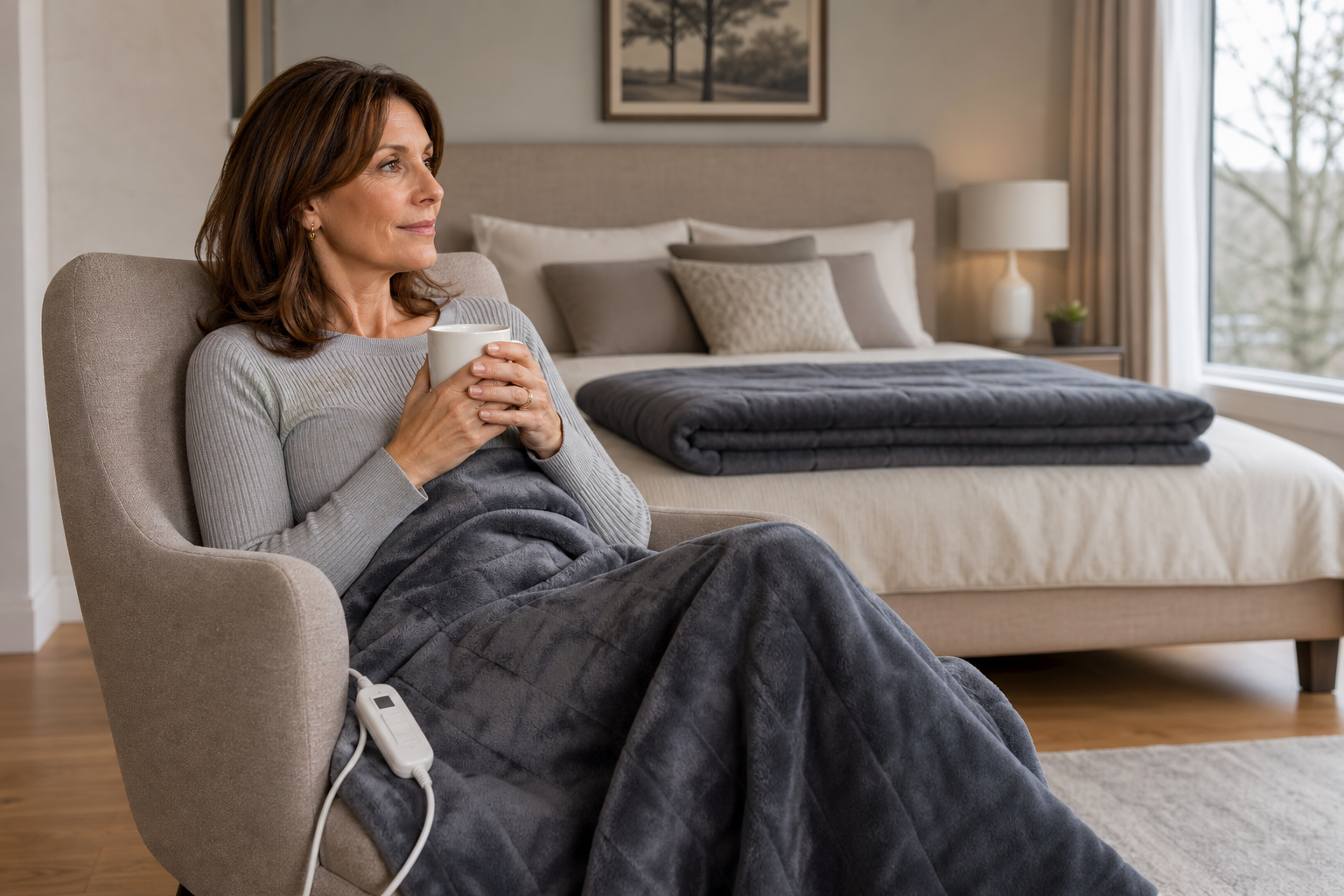
A heated throw is the more natural fit for relaxing at home when you want warmth around your lap, legs and torso without heating an entire bed. Common throw dimensions are roughly chair- or sofa-friendly, and the smaller footprint makes the product easier to move from a reading chair to a recliner or home office seat. Sunbeam’s heated-throw instructions, for example, describe use on a lounge or favorite chair and include an automatic shut-off feature. ([sunbeam-s3-production.s3.ap-southeast-2.amazonaws.com](https://sunbeam-s3-production.s3.ap-southeast-2.amazonaws.com/TR3000-3100-3300-4100-Heated-Throw-User-Guide_996cb8cbd3.pdf?utm_source=openai))
A heated blanket is better when your goal is coverage rather than portability. Bed-sized models are available for twin, full, queen and other mattress dimensions, and they can spread warmth across more of the surface. That makes them useful for pre-warming a bed or keeping a larger sleeping area comfortable, but they are bulkier and less convenient to carry around the house.
If “relaxing at home” means settling into one favorite chair for an hour or two, start with a throw. If it means making a cold bedroom or bed more comfortable, start with a blanket.
- Best for a heated throw: sofa time, reading, television, one-person use and portability.
- Best for a heated blanket: bed coverage, pre-warming sheets and larger sleeping surfaces.
Heated throw: where it makes the most sense
The biggest advantage of a heated throw is targeted warmth. You can warm the part of your body that feels chilly without wrapping an entire bed or carrying a large textile around. Its size also makes it easier to place over your legs while seated, although you should follow the specific manufacturer instructions and avoid bunching, folding or trapping the heated product.
Throws are also more flexible in shared spaces. One person can use a throw while another person sits nearby without changing the temperature of the room or the whole bed. That can be useful in homes where people prefer different comfort levels. A throw is often the simpler choice for a desk chair, den, sunroom or occasional guest seating.
The trade-off is limited coverage. A typical throw may leave your feet, shoulders or sides uncovered, depending on how you use it. It is usually not the right tool for warming an entire mattress, and it may not be large enough to share comfortably.
- Look for a controller that is easy to operate from a seated position.
- Check cord length and outlet location before buying.
- A smaller size is easier to store, but it will not provide bed-size coverage.
Heated blanket: where the larger format wins
A heated blanket earns its space when you want warmth distributed across a bed or broad lounging surface. Larger models can cover more of your body and may be more practical for pre-warming bedding. Some bed-size products also offer dual controls, although this feature varies by model and should be confirmed before purchase.
The larger format can feel more settled and less fussy when you are reclining for a long period. You are less likely to have a corner slide away from your feet, and a bed-sized blanket can provide more consistent coverage for someone who moves around during rest. It may also be the better fit for a couple who want to share one layer, provided the size and control arrangement suit both people.
The downside is that a heated blanket is less portable and can be harder to handle in the wash. It also requires more attention to placement: do not use it folded, tightly tucked or covered in a way that could trap heat. CPSC guidance warns against placing other blankets, comforters or pets on top of an operating electric blanket and advises keeping the blanket laid out rather than folded during use. ([cpsc.gov](https://www.cpsc.gov/s3fs-public/701.pdf?utm_source=openai))
- Choose the size based on the surface you want to cover, not just the mattress label.
- For shared use, look for independently adjustable controls if that matters to you.
- Avoid assuming a bed-sized blanket is suitable for all-night use; check the manual and timer settings.
Washable electric designs: what to verify before buying
“Machine washable” is useful, but it is not a universal permission to wash every heated textile the same way. The controller must generally be disconnected and removed before washing, and the product must be completely dry before it is plugged back in. Electrical Safety First specifically advises washing an electric blanket only when the manufacturer confirms that it is machine washable, removing detachable controls and ensuring the blanket is dry before reconnecting it. ([electricalsafetyfirst.org.uk](https://www.electricalsafetyfirst.org.uk/press-and-media/i-m-a-tech-expert-here-s-how-to-safely-spring-clean-your-home-gadgets/?utm_source=openai))
Read the care instructions for the exact model rather than relying on a retailer’s general product title. Check whether the item is washer-safe, whether it can go in a dryer, which cycle and temperature are allowed, and whether the control connection must be protected during washing. Biddeford’s product documentation, for example, describes machine washing after disconnecting the controller and gives specific drying instructions for its listed throw model. ([biddeford-blankets.com](https://www.biddeford-blankets.com/product/biddeford-blankets-microplush-electric-heated-throw-blanket-with-adjustable-heat-settings-and-auto-shut-off-timer-machine-washable-digital-controller-throw-greygrey-snowflake/?utm_source=openai))
Washability may favor a throw simply because it is easier to fit into a household washer and easier to inspect afterward. A larger blanket can still be washable, but its size may make laundering more awkward. In either case, inspect the fabric, cord, plug and connector before each season of use. Discoloration, fraying, damaged wiring or a hot connector are reasons to stop using the item rather than keep testing it.
- Confirm “machine washable” on the manufacturer’s page or manual.
- Remove the controller before washing if the design allows it.
- Reconnect only after the blanket is fully dry.
- Keep the care instructions for future washing and storage.
Controls, timers and safety features matter more than the label
The words “throw” and “blanket” do not tell you how the product behaves. Models vary in the number of heat settings, timer length, controller design and cord arrangement. Some use a simple dial; others use a digital controller. A large blanket with awkward controls may be less convenient than a smaller throw with a clear, reachable remote.
An automatic shut-off is one of the most useful features for home relaxation because it limits the chance that the product remains powered after you leave the room or fall asleep. Timer duration varies: Sunbeam documentation lists a three-hour auto-off on one heated-throw design, while Biddeford documentation lists a 10-hour auto-off on a particular model. Treat the timer as model-specific, not as a category standard. ([sunbeam-s3-production.s3.ap-southeast-2.amazonaws.com](https://sunbeam-s3-production.s3.ap-southeast-2.amazonaws.com/TR3000-3100-3300-4100-Heated-Throw-User-Guide_996cb8cbd3.pdf?utm_source=openai))
Recent CPSC warnings and recalls involving heated throws and blankets show why brand identification, model numbers and safety notices deserve attention before purchase. The agency has reported products with overheating, melting, fire and burn hazards, including models sold online. Check the manufacturer’s recall page and the CPSC recall database, especially when buying an unfamiliar marketplace brand. ([cpsc.gov](https://www.cpsc.gov/Warnings/2026/CPSC-Warns-Consumers-to-Stop-Using-Melinora-Electric-Heated-Blankets-Immediately-Due-to-Risk-of-Serious-Injury-from-Burn-and-Fire-Hazards?utm_source=openai))
- Prefer a clearly documented automatic shut-off.
- Make sure the controller is not covered while operating.
- Do not use a damaged product or one with scorched fabric, frayed cords or loose connectors.
- Avoid extension cords and power strips when the manufacturer specifically prohibits them.
Which one should you buy for your routine?
Choose a heated throw if your routine is room-based and personal: you move between a chair and sofa, want warmth while reading or watching television, or prefer not to heat an entire bed. A throw is also the more practical choice when storage space is limited or when you want one person to control their own comfort.
Choose a heated blanket if your routine is bed-based: you want to pre-warm sheets, cover a mattress-sized surface or have enough fabric to stay covered while reclining. It is also the better starting point for a larger bed or for two people who want to share one warming layer, assuming the product offers the right size and controls.
If you are undecided, measure the place where you will use it and mark that footprint with a sheet or existing blanket. This simple check reveals whether a throw will feel too small or whether a full-size heated blanket will be unnecessarily cumbersome. Then compare the exact care instructions, timer, controller and safety documentation before comparing colors or fabric finishes.
- For a chair or sofa: heated throw.
- For a bed or broad reclining surface: heated blanket.
- For the easiest storage and laundering: usually a throw.
- For maximum coverage: heated blanket.
Ready to Find Your Best Match?
Explore products that fit your priorities, compare current options and discover what works best for you.
Check prices, seller details and specifications on Amazon. Featured image is illustrative.
As an Amazon Associate I earn from qualifying purchases.
Sources & editorial note
This guide is research-based and does not claim hands-on testing unless explicitly stated.
- Sunbeam Heated Throw User Guide — Supports chair and lounge use, heat controls and a three-hour automatic shut-off on the listed throw design.
- Biddeford Blankets Heated Throw Product Page — Supports model-specific washability, controller removal, drying guidance, heat settings and auto-off details.
- U.S. Consumer Product Safety Commission Home Safety Checklist — Supports guidance against folding, covering or tucking electric blankets during use.
- Electrical Safety First: Cleaning Electric Blankets — Supports verifying machine-washability, removing detachable controls and drying fully before reconnecting.
- U.S. Consumer Product Safety Commission Heated Blanket Recalls — Supports checking product identification and recall information because heated throws and blankets have been recalled for fire, burn and electrical hazards.