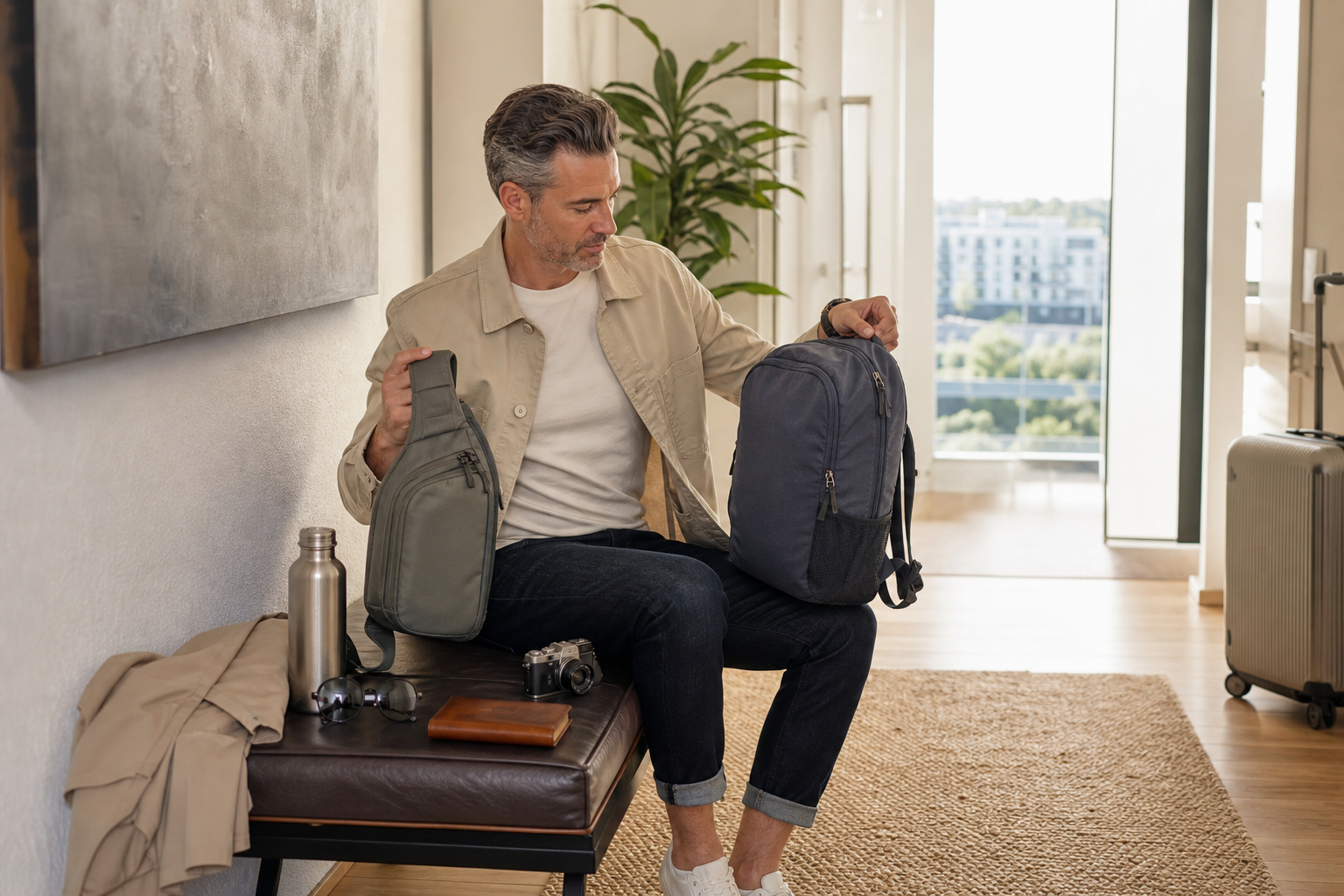
Choose a sling bag for phone, wallet, keys, sunglasses, a small camera, and a few compact essentials. Choose a daypack when you need more room, balanced shoulder carry, a water bottle, an extra layer, or enough organization for several hours away from home. If you regularly switch between these two load sizes, owning one of each may be more practical than forcing either bag to do every job.
What Matters Most
Start with the job to be done
A sling bag is designed around a small, close-to-the-body load. It is convenient for errands, sightseeing, museums, casual meals, short walks, and events where you want both hands free without wearing a full backpack. A current 8-liter sling example from Patagonia includes a single-strap harness, a front pocket, an internal divider, and exterior straps for carrying a light layer or mat. That feature set illustrates the category well: compact, accessible, and focused on essentials rather than maximum capacity. ([patagonia.com](https://www.patagonia.com/product/atom-sling-bag-8-liters/198077046516.html?utm_source=openai))
A daypack is the more flexible choice when the outing has several parts: walking to lunch, carrying a water bottle, stopping at a market, bringing a light jacket, or keeping a tablet and charger with you. REI describes daypacks as bags intended for multi-hour activities, with common travel and hiking sizes ranging from compact 10-liter models to 21-35-liter packs that can handle clothing, food, and additional gear. ([rei.com](https://www.rei.com/learn/expert-advice/daypack.html?related-style-id=190079&utm_source=openai))
The simplest dividing line is this: if your packing list fits in one small compartment and you want rapid access, start with a sling. If you are packing for changing weather, an all-day schedule, or unpredictable purchases, start with a daypack.
- Best starting point for a sling: essentials-only outings.
- Best starting point for a daypack: longer outings or variable loads.
- If your needs change by the day, look for a compact daypack that can stay lightly packed.
Capacity and organization: small load versus useful margin
Sling bags are appealing because they discourage overpacking. A compact design keeps your load visually and physically close, and it can be easier to find a phone, passport, keys, or sunglasses without digging through a deep backpack. The trade-off is that capacity is limited. Even an 8-liter sling may feel full once you add a water bottle, sunglasses case, small umbrella, power bank, and a light layer.
Daypacks give you more usable margin. Many everyday models fall in the 13-20-liter range, while larger travel daypacks move beyond that. Osprey, for example, lists its Daylite at 13 liters and positions it for everyday use, travel, and day hikes. REI identifies 11-20 liters as a compact range for travel and day activities, while 21-35 liters is a common sweet spot for more substantial day trips. ([osprey.com](https://www.osprey.com/daylite-daylites21-794?utm_source=openai))
More space is helpful only if the bag remains manageable. A daypack that is too large can invite you to carry items you do not need, while a sling that is too small can become frustrating when you are forced to leave useful items behind. Look for organization that matches your habits: a key clip if you misplace keys, a padded sleeve for electronics, an exterior bottle pocket if you drink while walking, or a simple open interior if you prefer to pack quickly.
- Sling advantage: compact organization and fast access.
- Daypack advantage: room for layers, water, purchases, and travel accessories.
- Do not judge capacity by liters alone; shape, opening size, and pocket layout matter.
Comfort and weight distribution
A sling carries its load on one side of the body. That can feel natural when the bag is light and you need to swing it forward to reach the contents. It becomes less appealing when the bag is packed densely or worn for many hours. The closer the load sits to your body, the more stable it generally feels, but a single strap still concentrates the load rather than sharing it across two shoulders.
A daypack spreads the load across two shoulder straps and may include a sternum strap or hipbelt. REI notes that a sternum strap helps keep the harness in position, while a hipbelt can transfer some weight away from the shoulders; padded straps may improve comfort with heavier loads, although they can add bulk and reduce breathability. ([rei.com](https://www.rei.com/learn/expert-advice/daypack.html?related-style-id=190079&utm_source=openai))
For a short outing, the sling's simplicity may matter more than load distribution. For a full day of walking, a balanced daypack is usually the safer default from a comfort standpoint. Fit matters, too: adjust the straps so the pack sits close without pulling backward, and avoid using a large bag half-empty if a smaller one would carry the same items more comfortably.
- Choose a sling when the load is light and access matters most.
- Choose a daypack when you will walk for hours or carry heavier items.
- Check whether a sling can be worn on your preferred shoulder; not every design is reversible.
Travel, security, and everyday access
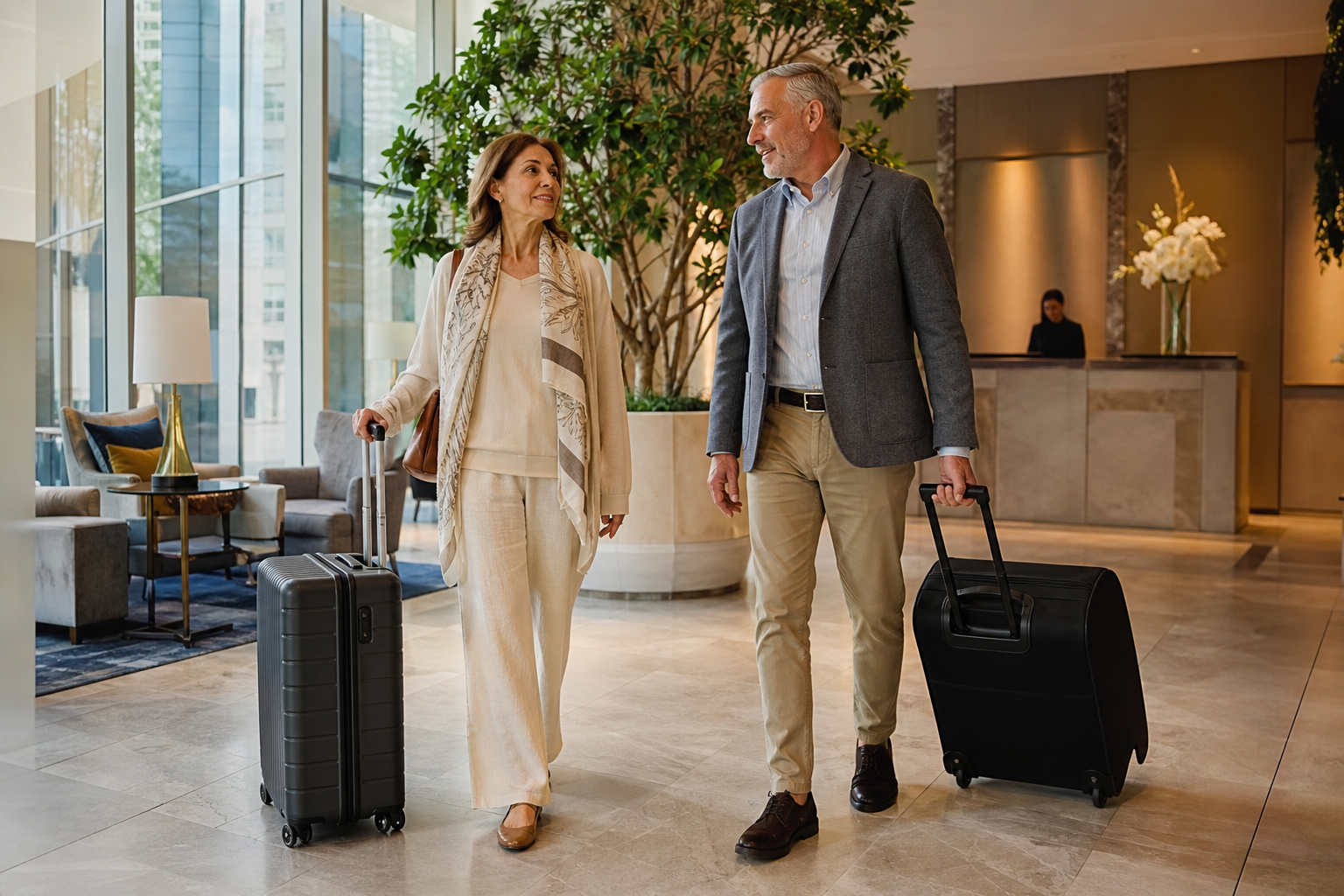
For travel, a sling can be useful as a personal essentials bag: passport, phone, wallet, medication container, earbuds, and travel documents. It is easy to rotate toward the front in crowded places, and a close-fitting design can make it easier to keep track of important items. However, its limited capacity means it works best alongside luggage rather than as your only day bag for a full day of sightseeing.
A daypack is more versatile on a trip. It can hold snacks, a refillable bottle, a compact rain shell, a camera, a guidebook, and small purchases. It can also serve as a personal item or secondary carry bag, depending on the airline's current rules and the pack's actual dimensions; check the carrier directly before relying on it for a flight.
Access is the main trade-off. A sling can be moved from your back to your chest without fully removing it, making it convenient for transit and quick stops. A daypack usually needs to come off for full access, although front-panel openings, side zippers, and separate pockets can reduce the inconvenience. For travel, prioritize lockable or covered zippers, a discreet appearance, and a layout that keeps valuables separate from snacks or clothing.
- Sling fit: passports, phone, wallet, camera, and other high-access essentials.
- Daypack fit: sightseeing, commuting, day hikes, and carrying layers or food.
- Always verify current airline size rules rather than assuming a bag qualifies.
Weather, clothing, and active use
Neither category is automatically waterproof. Look for the manufacturer's specific material and construction details, such as a water-resistant fabric, coated exterior, covered zippers, or an included rain cover. Patagonia's Atom Sling, for example, lists recycled polyester with a durable water-repellent finish, but that does not mean the bag is designed for prolonged heavy rain or submersion. ([patagonia.com](https://www.patagonia.com/product/atom-sling-bag-8-liters/198077046516.html?utm_source=openai))
A sling can work well for cycling, public transit, and casual walking because it stays close and does not extend as far behind you as a bulky pack. Its limitations appear when you add a bulky jacket, lunch container, camera equipment, or a full bottle. Exterior attachment points may help, but they are not a substitute for interior capacity or a stable load.
A daypack is usually better for changing conditions because it can hold an extra layer, compact umbrella, food, and water without becoming immediately overstuffed. For warmer weather, pay attention to the back panel and strap design. REI notes that padded shoulder straps can improve carrying comfort but may be less breathable, while lighter designs can favor airflow and movement at the expense of support. ([rei.com](https://www.rei.com/learn/expert-advice/daypack.html?related-style-id=C07944&utm_source=openai))
- For rain, evaluate the fabric, zippers, seams, and whether a cover is included.
- For warm weather, compare back-panel ventilation and strap padding.
- For cycling or active use, favor a stable fit over maximum pocket count.
How to choose your everyday option
Choose a sling bag if your usual load is limited to personal essentials, you want quick access, you prefer a low-profile carry, and most outings last a few hours. It is especially practical when you do not want a full backpack for dinner, shopping, a concert, a museum, or a short urban walk. A well-designed sling should sit securely, open wide enough to reach the contents, and include at least one protected pocket for valuables.
Choose a daypack if you carry water, an extra layer, lunch, electronics, reading material, or purchases; if you walk for much of the day; or if you want one bag to cover commuting, travel, and casual outdoor use. Prioritize a comfortable harness, a shape that stands or opens easily, an exterior bottle pocket, and enough structure that the contents do not collapse into one hard-to-search compartment.
If you are undecided, write down what you carried on your last three outings. If the same small essentials appear every time, a sling may be the more convenient everyday answer. If you repeatedly add a jacket, water, snacks, or purchases, buy for the larger realistic load rather than the smallest possible one. The best bag is the one that makes your normal day easier without becoming unnecessary baggage.
- Buy the sling for convenience and restraint.
- Buy the daypack for flexibility and balanced carrying.
- Consider both if your everyday outings vary substantially.
Sources & editorial note
This guide is research-based and does not claim hands-on testing unless explicitly stated.
- REI Co-op Expert Advice: How to Choose Daypacks — Supports daypack definitions, capacity ranges, fit features, organization, and strap trade-offs.
- Osprey Daylite — Provides a manufacturer example of a 13-liter everyday and travel daypack.
- Osprey Daylite Collection — Supports examples of compact daypack capacities and everyday, travel, and trail positioning.
- Patagonia Atom Sling Bag 8L — Provides a manufacturer example of sling capacity, weight, organization, harness design, and water-resistant fabric treatment.
- REI Co-op: How to Run Errands on a Bike — Supports the comparison between balanced daypack carry and single-strap carry for active errands.